Last updated October 15, 2026
DIY vs Professional ADU: The Torrance Homeowner’s Decision Guide
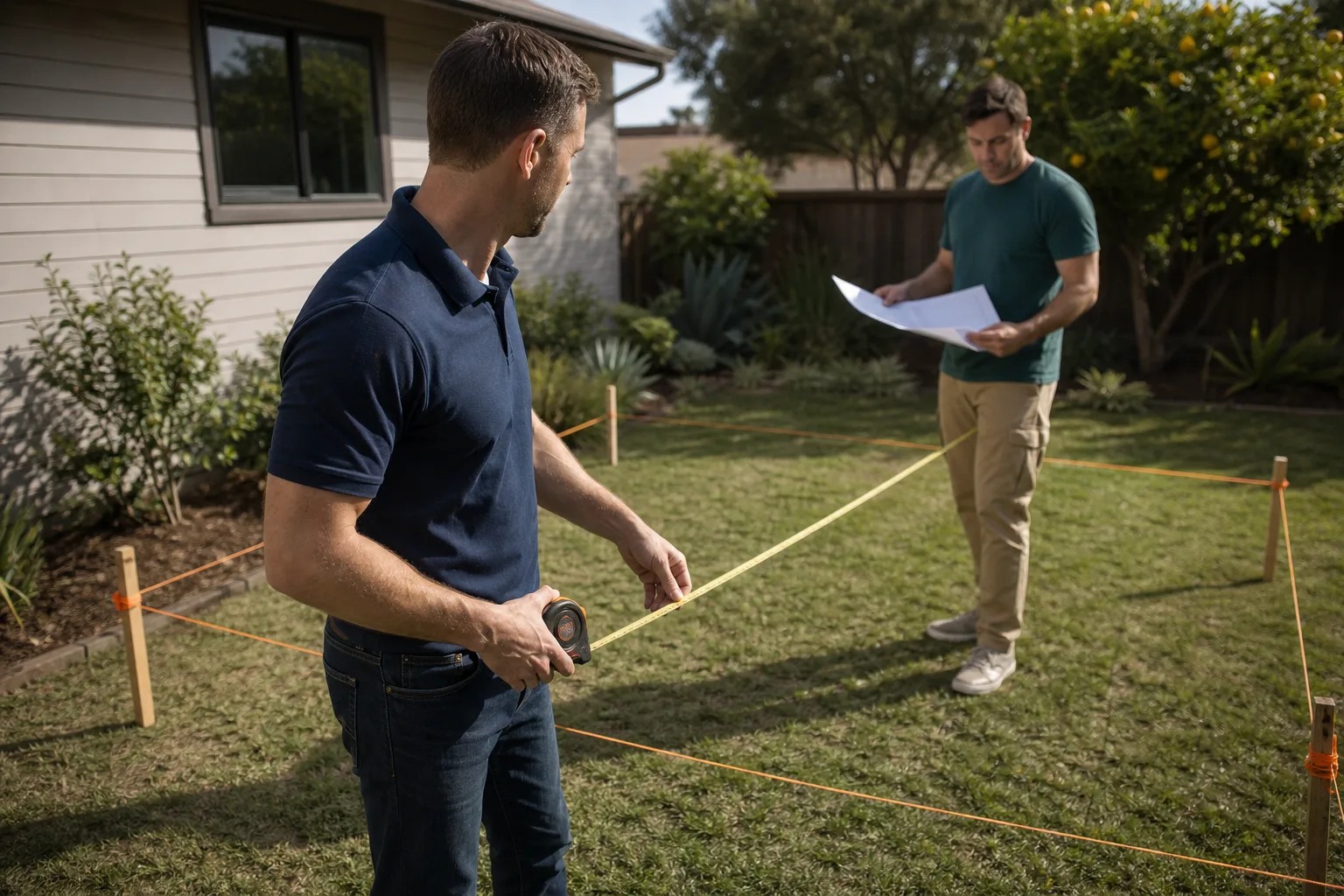
California law lets you build your own ADU on your Torrance property. But before you pick up a hammer, you should know this: the state’s owner-builder permit exemption requires you to sign a disclosure form that makes you personally responsible for construction defects discovered years after you sell. In fact, more than half of the Torrance homeowners we speak with who considered the DIY route didn’t know that this disclosure exists at all. This guide walks through the real stakes of that decision, from permit exposure and inspection queues to actual cost comparisons and the three tasks you can genuinely handle yourself.
Quick Answer
For most Torrance homeowners, hiring a professional ADU contractor in Torrance is the lower-risk choice because California’s owner-builder rules create personal financial exposure that a licensed contractor’s bond and workmanship warranty absorb. DIY makes sense only for finish work completed after the permit is closed and the licensed trades have signed off. The savings from acting as your own general contractor rarely cover the cost of a single permit correction or an insurance claim denied because of unpermitted work.
Table of Contents
- What the Owner-Builder Disclosure Actually Says
- How Torrance Inspectors Treat Owner-Builder Projects
- The Real Cost Comparison: Labor Savings vs. Corrections and Delays
- What You Can Actually DIY After the Permit
- Where Licensed Trades Are Non-Negotiable
- A Honest Framework for Your Decision
- Resale and Insurance Consequences Most Guides Miss
- Common Mistakes to Avoid
- When to Call a Professional
- Frequently Asked Questions
- The Bottom Line
What the Owner-Builder Disclosure Actually Says
When you apply for an owner-builder permit in Torrance, you don’t just pay a fee and get greenlit. You sign a document under penalty of perjury that you will occupy or intend to occupy the property, that you are not building it for sale, and that you understand the consequences. The two clauses that matter most are these. First, you acknowledge that you cannot sell the property for one year after completion of the permitted work. Second, you accept that the contractor licensing laws do not protect you because you are not hiring a licensed contractor, meaning defects, construction failures, and code compliance problems are yours alone to fix.
What most comparison guides skip is the title insurance angle. When you sell a Torrance home with an owner-built ADU that was completed within a disclosure window, title insurers may require you to buy supplemental coverage or may exclude ADU-related claims entirely. A buyer’s lender can also require performance documentation that owner-builders rarely have: a structural engineer’s wet-stamped report, load path calculations, and thermal and moisture protection certifications. You might have built a perfectly sound ADU, and you might still be unable to prove it on the timeline a lender demands.
The practical effect in Torrance’s market, where ADUs are increasingly a selling feature rather than a quirk, is that your owner-built unit can become a liability instead of an asset. A professionally built ADU comes with a contractor’s workmanship warranty and the licensing board as a backstop. An owner-built ADU comes with your signature and your word. Both have value. Only one survives a real estate transaction structured by people whose job is to price risk.
We’ve seen this exact disclosure scare sensible families out of an otherwise well-planned DIY project. We’ve also seen it wake homeowners up to what “saving on labor” actually costs in legal exposure. Knowing the document exists is step one. Reading the clause that says you “will not sell the property within one year” and asking yourself what happens if your family needs to move for work, for school, for any reason at all, is the conversation most people never have.
How Torrance Inspectors Treat Owner-Builder Projects
Torrance building inspectors do not treat an owner-builder’s project the same way they treat a contractor’s. It is not a bias against homeowners. It is about repeat exposure. A licensed general contractor who pulls 50 permits a year in Torrance knows the inspectors, knows what triggers a failed inspection, and usually knows the correction before the inspector finishes writing it. An owner-builder sees the inspection checklist for the first time on the morning of the visit.
That difference shows up in the queue. In our experience running projects through Torrance’s Community Development Department, owner-builder inspections tend to be scheduled with less flexibility, and the re-inspection cycle moves slower. When a plumbing rough-in fails because of a fitting a homeowner didn’t know was banned under 2023 plumbing code updates, the correction window is the same for everyone, but the knowledge gap makes mistakes more frequent. Each corrected mistake adds seven to ten business days in Torrance’s current inspection cadence. Three failed inspections is not unusual for a first-time owner-builder. Three failed inspections is essentially unheard of for a contractor who has built ADUs in the South Bay for years.
The other difference is sequencing. Professional ADU builders in Torrance schedule inspections in a specific order that keeps the project moving. An owner-builder often finds out the hard way that the city wants the foundation inspected before backfill, not after. The fix is re-excavation. That is not a hypothetical. We’ve consulted with Torrance homeowners who spent $4,000 to $6,000 correcting a covered conduit or buried strap that a contractor would have caught by staging inspections in the right order.
None of this means a determined homeowner can’t pass inspections. It means the timeline you plan for a DIY build should include a 25 to 40 percent schedule buffer that a professional build with year-round care typically does not need. In Torrance, where ADU permits are already moving faster than in neighboring cities, the queue itself is not the bottleneck. The correction loop is. And that loop is longer for anyone who hasn’t done it dozens of times.
The Real Cost Comparison: Labor Savings vs. Corrections and Delays
The headline number is always labor. A general contractor’s fee in Torrance runs roughly 15 to 20 percent of total construction cost, and labor itself is typically 40 to 55 percent of the hard costs for a stick-built ADU. So the savings from acting as your own GC look meaningful: on a $180,000 build, the GC fee alone is $27,000 to $36,000. That is real money.
Here is what the savings calculation usually forgets.
- Permit correction fees. Torrance charges re-inspection fees for failed inspections. A first-time owner-builder should budget for at least two or three. At $150 to $250 per re-inspection, that’s modest. The cost of the correction itself is not. Re-opening a wall to fix a fire-blocking issue or re-pulling a section of subfloor for shear nailing can run $500 to $1,800 per incident.
- Tool and equipment rental. A first ADU will require a plate compactor, concrete saw, laser level, scaffold system, and a roofing nailer at minimum. Rental costs in the Torrance area run $800 to $2,400 for a project of this length, depending on the phase count.
- Trade pricing differences. Contractors get trade rates from South Bay suppliers because they buy in volume. A homeowner walking into a plumbing supply house pays retail, typically 10 to 18 percent more. On materials only, a $40,000 rough-in package costs the owner-builder $4,000 to $7,000 extra.
- Extended project duration. A professional Torrance ADU build takes 6 to 10 months from permit approval to final inspection. An owner-builder working nights and weekends should expect 14 to 24 months. Every extra month is a month of property taxes, insurance, and, for many families, a redirected home equity line. Carrying costs of $500 to $1,500 per month are common.
- Lender draw complications. If the ADU is financed through a construction loan or HELOC, owner-builder status often triggers slower draw approvals. Lenders want independent verification of progress. Without a licensed GC’s lien waiver documentation, each draw takes longer and may require a third-party inspection at $200 to $400 each.
The honest arithmetic for a Torrance homeowner building a $180,000 stick-frame ADU might look like this: $30,000 in GC fee savings, minus $4,000 in trade pricing differences, minus $3,000 in tool and equipment rental, minus $5,000 in correction costs, minus $7,000 in carrying-cost overruns. That leaves roughly $11,000 in genuine savings before factoring in the disclosure exposure. For a $250,000 custom build, the numbers shift but the pattern holds. The primary savings in owner-building is not money. It is autonomy. Some families want that. Most families we meet simply want a finished ADU at a price they can plan around.
What You Can Actually DIY After the Permit
There is a narrow and genuinely feasible do-it-yourself window. It opens after the final inspection closes the permit. Everything before that is regulated work that follows code and requires schedules, sequencing, and sign-offs. Everything after the permit closes, up to the point of occupancy, is where a Torrance homeowner can save real money without signing away legal protections.
Here are the tasks we routinely tell families they can handle:
- Interior painting. After drywall and trim are complete and the final inspection is passed, paint is a fully DIY task. The materials cost $500 to $900 for a 500-square-foot ADU, and the labor savings against a professional painter is $2,500 to $4,500.
- Landscaping and irrigation. Torrance water conservation ordinances require drought-tolerant plants in new landscaping around an ADU. The design and plant selection are within reach of any diligent homeowner, and the materials run $1,500 to $4,000. A landscape contractor would charge $8,000 to $15,000 for the same scope.
- Appliance installation. Plug-in appliances such as a refrigerator, washer, and electric dryer do not require a licensed installer in most cases. Hard-wired appliances such as a tankless water heater or an EV charger do. Check the manufacturer’s installation manual; if it requires a dedicated circuit and a junction box, that is an electrician’s task.
- Interior shelving and closet systems. Once walls are closed and painted, custom closet build-outs and pantry shelving are pure finish work. A homeowner with a miter saw and a level can save $1,800 to $3,500 against custom closet company pricing.
- Smart home devices. Thermostats, security cameras, and lighting controls that mount to existing boxes and connect via wireless protocols are fair game. Anything that requires running new line-voltage wiring is not.
The pattern here is consistent: finish work that does not touch structure, plumbing, electrical, or mechanical systems is DIY-feasible. Work that touches those systems requires a licensed trade’s signature, no matter how skilled the homeowner is. If you want to maximize your own labor without taking on general contractor liability, tell your builder you’ll handle paint, landscape, closets, and appliance set-up, and ask for a written price that reflects that scope.
Ben Ortega has walked dozens of Torrance families through this exact phasing plan. The families who are happiest with their decision, he says, are the ones who picked a clear line between “my work” and “the contractor’s work” before the permit was ever pulled. A written scope that excludes finish work keeps the accounting clean, and it keeps the Cedarwell Care Promise meaningful: shoe covers and drop cloths on every visit, pet-safe products where there is a choice, and a photo of the clean-up before the crew leaves, whether the crew is doing the paint or the homeowner is doing it after we leave.
Where Licensed Trades Are Non-Negotiable
California’s contractor licensing law does not care how capable you are. It cares about whether the work touches a system regulated by a specific trade license. If it does, the person doing the work must hold that license, or the permit is invalid from the start.
The non-negotiable trades in any Torrance ADU build:
- Electric. Panel work, circuit installation, home runs, main service upgrades, and any wiring inside walls requires a California C-10 electrical contractor license. The code now requires Arc Fault Circuit Interrupters on most ADU branch circuits, and the city inspection on those circuits has become one of the most common failure points for owner-builders.
- Plumbing. DWV (drain, waste, vent) rough-in, water supply lines, gas piping, and fixture installation tied to the building’s central systems requires a C-36 plumbing license. A mis-vented drain can pass visual inspection and fail under a pressure test weeks later.
- HVAC. A mini-split heat pump system requires a C-20 warm air heating license when installed on a permitted project. The line set, the condensate run, and the electrical connection are all part of the permitted scope. Every year, we see a Torrance homeowner learn this after buying a ductless unit from a big-box retailer and reading the warranty’s fine print: professional installation required or the warranty is void.
- Structural engineering. Not a trade, but a gatekeeper. Any wall removal, foundation work, shear wall installation, or flat roof conversion needs a California-registered engineer’s stamp before the permit is issued. You cannot draw your own load path.
- Roofing. A roof replacement or significant repair on a permitted structure requires a C-39 roofing license. The risk here is not just code compliance; it’s the warranty. The largest manufacturers of Torrance roofing materials will not honor a warranty for a non-licensed installation.
We’ve seen families who planned a full DIY ADU discover that the only legal path was to act as their own project manager and hire out the four licensed trades while self-performing the framing, drywall, and finish work. That hybrid model is legal. It is slower. But it keeps the owner-builder savings on the scopes where savings are real and transfers the trade risk to licensed professionals where it belongs.
A Honest Framework for Your Decision
The DIY-versus-professional question usually gets framed as courage versus expense. We think that is wrong. The right framing is timeline flexibility versus total cost certainty, because that’s what the decision actually trades.
Ask yourself three questions. Answer honestly, and the decision makes itself.
- Would a one-year construction timeline break this project? If you need the ADU generating rental income or housing an aging parent within 12 months, owner-building is not a viable plan. Professional Torrance ADU builders delivering in 6 to 10 months keep your schedule intact. If your timeline is genuinely open-ended and the ADU is a five-year family plan rather than a next-year income need, DIY becomes more plausible.
- Can you carry $600 to $1,500 per month in extended project costs without strain? Those carrying costs are property taxes, insurance, interest, and the opportunity cost of the tied-up capital. If that number is meaningful to your household budget, the professional path’s shorter duration is worth more than the GC fee you save.
- What happens to your plan if your family needs to move in 18 months? The owner-builder disclosure’s one-year sale restriction is not theoretical. If a job transfer, school change, or family situation forces a sale before the window closes, your ADU becomes a burden rather than a value-add. Professionally built ADUs have no such restriction. The sale proceeds like any other permitted improvement.
There is one profile where DIY genuinely makes sense: a retired or semi-retired homeowner with construction-adjacent experience, no financing pressure, no urgency, and a genuine interest in the work itself. There is another profile where professional construction is clearly the right call: a working family with kids and pets, a financed project, a hard deadline, and no desire to spend weekends wearing a tool belt. Most Torrance families reading this are in the second group.
Resale and Insurance Consequences Most Guides Miss
Your homeowners insurance policy does not automatically cover an owner-built ADU under construction. Standard HO-3 policies in Torrance cover the primary dwelling. A detached ADU under construction is often excluded or requires a specific builder’s risk endorsement. A licensed contractor carries their own general liability and builder’s risk coverage. An owner-builder carries whatever insurance they thought to purchase. If a worker is injured on an owner-builder site without a worker’s compensation policy in place, the homeowner’s personal assets are the deep pocket. That is not a scare tactic. That is what “personal liability” means in this context.
The resale question is equally specific. A prospective buyer’s lender will order a title report and a property condition review. When the title report shows the ADU was built under an owner-builder permit within the previous year, the lender may require the seller to provide an engineer’s structural verification, a city code compliance letter, and, in some cases, a survey confirming the ADU’s placement against setback requirements. Each of these documents takes time. In a market where Torrance homes with ADUs sell on tight schedules, a financing contingency that drags out can cost a seller their buyer.
Insurance carriers in southern California have become more conservative about ADUs since 2023. We’ve heard from Torrance families whose carriers refused to renew a policy after discovering an unpermitted or owner-built ADU on the property. Some cases trace back to a garage conversion completed by a previous owner, not the current homeowner. The lesson here is not that owner-building is always wrong. It is that the decision’s consequences outlive the project by a decade or more. A $12,000 savings in year one can become a $25,000 repair and a delayed sale in year six. That math does not appear in most DIY comparison guides because most comparison guides are not written by people who have had to sit across the table from a Torrance homeowner explaining why their perfectly fine ADU is scaring off lenders.
For families who want the ADU route without the exposure, ADU Builders in Torrance handle the license, the insurance, the permits, and the warranty as part of a fixed written price. When we build an ADU, the finished structure carries our 365-Day Done Right Promise in writing. If it is not done right, we make it right. That line means something specific in the resale context: a future buyer inherits the warranty, not the liability.
Common Mistakes to Avoid
- Pulling the owner-builder permit before you fully understand the disclosure. The document arrives near the end of the permit application, but the right time to read it is before you start. Once you sign it, your one-year sale restriction is locked in. Read the exact language first, then decide.
- Assuming the city will catch every code issue before it becomes a problem. Torrance inspectors are thorough, but they inspect at defined stages. They do not review your entire project for latent defects. An improperly flashed window that passes visual inspection can fail two winters later, and the repair is yours, not the city’s.
- DIYing the electrical rough-in because you’ve replaced an outlet before. The NEC’s AFCI and GFCI requirements for ADUs have changed twice in the last two code cycles. A homeowner wiring to ten-year-old knowledge will fail inspection and create a code-correction cost that exceeds any trade labor savings.
- Not budgeting for the slower inspection timeline. Every owner-builder’s project schedule assumes inspections happen as fast as the city can route them. In Torrance, inspection routing for owner-builders moves at the city’s pace, and that pace is slower than a contractor’s. Build a 30 percent timeline cushion into your plan from day one.
- Treating the GC fee as pure overhead instead of risk transfer. The contractor’s fee is the price of transferring permit liability, trade coordination, warranty coverage, and timeline responsibility to a licensed entity. Calling it waste misses what you’re actually buying.
- Forgetting that a finished DIY ADU is still an insurance question. Most families don’t call their insurer before starting to build. By the time the ADU is done, the policy may have been canceled or non-renewed. Call your carrier in the planning phase, not the finishing phase.
- Skipping the prefab conversation because you think it’s more expensive. Torrance homeowners are increasingly surprised by how competitive factory-built ADUs from Abodu and Cover are against stick-build pricing. The savings show up in construction time and site disruption, not just the line-item price. If you’re weighing DIY, you owe it to yourself to compare against a prefab professional build before you commit to two years of weekends.
When to Call a Professional
If your ADU will be financed, call a professional. If you need it occupied within a year, call a professional. If you have never managed a construction schedule, a building permit, or a trade subcontractor, call a professional. If your family includes kids and pets and you can’t afford 18 months of construction dust and open trenches in the yard, call a professional. We’ve built enough ADUs in Torrance to know what goes wrong before it goes wrong, and we price that knowledge honestly up front. Seedling ADU Torrance home page explains exactly how our written-price process works. For a free estimate in Torrance, call (424) 488-0926.
Frequently Asked Questions
A new detached ADU in Torrance typically costs between $130,000 and $320,000, depending on size, site conditions, finish level, and whether you choose site-built or prefab construction. A garage conversion ADU runs $70,000 to $145,000. A permitted home addition in Torrance falls between $120,000 and $280,000. These are all-in ranges that include permits, trade work, and finishes, not including design fees. For a written, line-by-line price specific to your lot, call (424) 488-0926 for a free estimate.
Yes, under the owner-builder exemption, as long as the property is not intended for sale and you do the work or directly supervise hired labor for your own residence. The catch is the owner-builder disclosure, which restricts sale for one year and makes you personally responsible for construction defects the licensing laws would otherwise assign to a contractor’s bond. You’ll still need licensed trades for electrical, plumbing, and HVAC work, and the permit will still require the same inspections as a professional build.
Torrance typically processes complete ADU permit applications in 2 to 4 months under California’s ADU streamlining law, but incomplete applications or projects requiring discretionary review can take longer. A professional builder who submits clean, complete plans usually sees faster turnaround because the plans don’t trigger correction cycles. The permit timeline is separate from construction time, which runs 6 to 10 months for a professional build and substantially longer for an owner-builder.
Prefab ADUs from Abodu, Cover, and Dvele often cost roughly the same as site-built construction when you compare total project cost, but they save time and on-site disruption. A prefab unit’s factory construction reduces the number of weeks trades are on your property, which means less noise near the kids’ bedrooms and fewer surprises in the weekly rhythm. Garage Conversion Contractor in Torrance and our full ADU guide cover prefab options in more depth. Call (424) 488-0926 to compare prefab and site-built pricing for your specific lot.
Not if the scope is written down first. Our process at Seedling ADU Torrance is built around a written price before a single tool is picked up, with no surprise line items added after crews arrive. The change orders that plague owner-builder projects, usually from undiscovered site conditions or trade sequencing mistakes, are exactly what the written-price discipline prevents. If a condition on your site changes the scope, you’ll see the revised price in writing before the work proceeds.
Yes. Size does not exempt an ADU from Torrance’s permit requirements. Even a 300-square-foot detached unit with a single bedroom requires the full permit path, including structural plans, energy compliance, and trade inspections. The exemption that exists under California law is for very small accessory structures under 120 square feet without plumbing, like a simple shed, not for an inhabitable ADU. If the space has a bed, a kitchen fixture, or a bathroom, it is permitted work.
The Cedarwell Care Promise is the standard we operate under on every job: shoe covers and drop cloths on every visit inside the home, pet-safe products where there is a choice, a photo of the clean-up before the crew leaves, and a live person available by phone 24/7. You’ll know exactly who is walking through your door because every technician is background-checked and uniformed. It is how a professional crew should behave on a Torrance family’s property, whether the project is a Home Addition Contractor in Torrance scope or a full ADU build.
The Bottom Line
The DIY-versus-professional ADU decision in Torrance is not really about construction skill. It is about the legal and financial architecture of the permit. California’s owner-builder disclosure transfers risk to the homeowner in ways that most comparison guides never mention, and the inspection queue, trade pricing, and insurance consequences all favor licensed professionals for anything beyond finish work. If your family has a hard timeline, a financed project, or a low appetite for two years of weekend labor, the math points to a professional build. Treat the permit as a risk decision, not a savings decision, and the right answer stops being a debate. For more guides & resources on ADU planning in Torrance, explore our blog.
ADU Builders in Torrance have walked hundreds of families through this exact choice. For a free, written estimate on your Torrance ADU, garage conversion, or home addition, call (424) 488-0926.
Written by Ben Ortega, Owner at Seedling ADU Torrance, serving Torrance since 2001.