Last updated October 15, 2026
ADU Warning Signs: A Torrance Homeowner’s Reference Guide
The most common ADU dispute in California doesn’t start with bad framing or a leaky roof. It starts with a contractor who pulled a permit under a different address or listed a project scope that doesn’t match the signed contract. These two discrepancies are visible on public records and almost never checked. This guide, alongside The Complete Guide to ADU in Torrance, is built for Torrance homeowners who want to catch the quiet administrative signals that appear weeks before any physical problem, and course-correct while the fix is still cheap. We’ll walk through what to check, when to check it, and what to say when something doesn’t line up.
Quick Answer
ADU contractor warning signs in Torrance fall into four buckets: permit paperwork that doesn’t match your signed contract, crews that rotate without explanation, materials delivered that don’t match the spec sheet you approved, and communication patterns that set up scope creep instead of naming it. The fix is almost always the same: stop work, ask for a written reconciliation, and verify the discrepancy against public records kept by the City of Torrance Building Department. We’ve seen a written price before any work starts prevent most of these problems from ever appearing, as covered in our DIY vs Professional ADU: The Torrance Homeowner’s Decision Guide.
Table of Contents
- How to Verify That the Permit Matches Your Signed Contract
- What “Deferred Submittals” Means for Your Timeline
- The Subcontractor Rotation Warning
- Material Delivery Mismatches and Your Spec Sheet
- Three Phrases That Signal Scope Creep Is Being Set Up
- What a Legitimate Change Order Looks Like
- Common Mistakes to Avoid
- When to Call a Professional
How to Verify That the Permit Matches Your Signed Contract
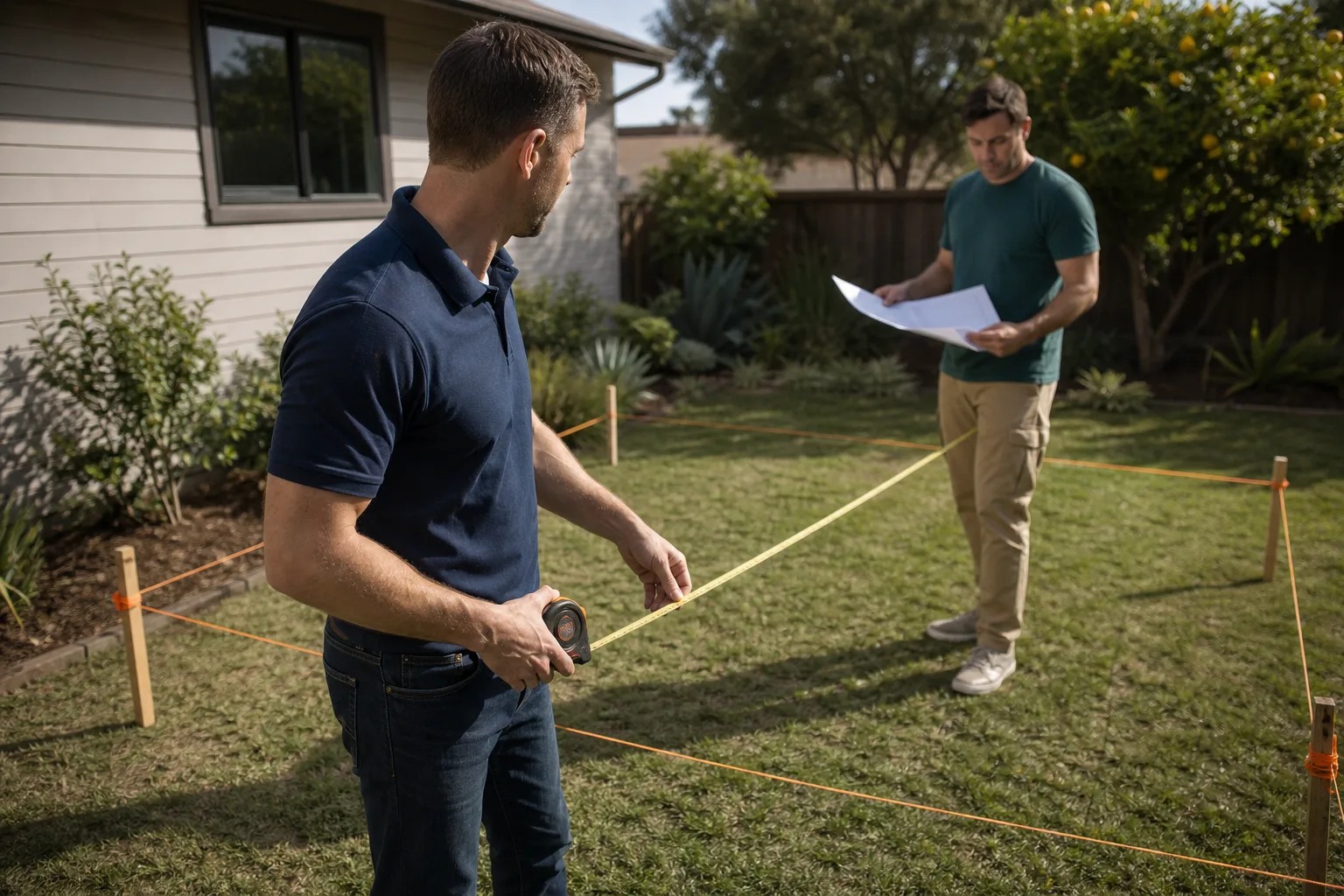
The first warning sign is the easiest to check and the least checked. Before any work begins, or as soon as you sense something is off, pull your permit from the City of Torrance Building Department’s online portal. Look at two fields. First, the project address. It should match your property exactly. We’ve seen permits pulled for “123 Main St” when the ADU is going in at “123 Main St, Unit B” or a rear lot address that Torrance assessors record differently. Second, the scope of work description. It should match the signed contract you hold in your hand. If the contract says a 480-square-foot one-bedroom ADU with a kitchen and bath, and the permit says 400 square feet of “storage conversion,” something is wrong.
Why does this matter? A permit with a smaller scope than the contract means the contractor is building something different from what the city approved. That creates two problems. First, you may be paying for work the city will never sign off on. Second, if the discrepancy is discovered during inspection, the city can issue a stop-work order, and you’ll wait. In Torrance, where the building department requires specific ADU plans and energy compliance documentation under the California Energy Code, a mismatched permit is not a technicality. It’s a red flag that the contractor is cutting corners on purpose or lost control of the paperwork.
Here’s the step-by-step check we recommend to every Torrance homeowner:
- Log into the City of Torrance Building Department permit portal and search for your address.
- Open the permit and read the “Project Description” or “Scope of Work” field word for word.
- Compare it to the scope listed in your signed construction contract. Look for differences in square footage, room count, and use designation.
- Check the “Contractor of Record” name. It should match the company you signed with, not a different entity or a person you’ve never met.
- If anything differs, stop work and ask for a written explanation before the next crew arrives.
One thing we tell every family working with ADU builders in Torrance is that a permit is a public promise. When the permit matches the contract, both parties are protected. When it doesn’t, only the contractor is protected, because the discrepancy is always found after the concrete is poured, not before. At Seedling ADU Torrance, every project starts with a written price and a permit pulled to match that scope exactly. Ben Ortega checks every permit personally before crews arrive.
What “Deferred Submittals” Means for Your Timeline
A “deferred submittal” is a portion of the construction plans that the city allows the contractor to submit after the main permit is issued. In Torrance ADU projects, deferred submittals commonly cover truss engineering, prefabricated stair systems, or specific window and door assemblies. The language sounds bureaucratic, but the practical effect is simple: your project is moving forward without every detail fully approved.
Is that a warning sign? Not by itself. Deferred submittals are a normal part of California ADU construction. The problem appears when a contractor doesn’t tell you what is deferred and what it means for your schedule. Here’s the scenario we hear most often from Torrance homeowners who call us mid-project. The permit is issued, the foundation is poured, and the framing goes up. Then the truss engineer’s stamped drawings come back with a change. The roof pitch doesn’t work. The truss supplier needs eight weeks. Nobody mentioned that the truss design was deferred. The project stalls, and the homeowner learns about it from the framer, not the project manager.
The fix is to ask one question at the moment you sign the contract: “What does the permit list as deferred, and when will those submittals be due?” A competent ADU contractor should answer in writing. At minimum, they should give you the list of deferred items and an estimated submission date for each. If they can’t or won’t, treat that as a warning sign. It means they haven’t thought through the permitting sequence, or they’re hiding a schedule risk.
In Torrance, plan check review times vary by season. We’ve seen deferred truss submittals add three to six weeks to a project when the engineering office is backed up. A contractor who knows this will build that buffer into your schedule from day one. A contractor who doesn’t will hand you a surprise delay and call it “the city’s fault.” Before you sign, ask for the deferred submittal list. Then ask what happens to your timeline if any of those items comes back requiring revision. The answer tells you more than the contract does.
For a broader view of how permits, scope, and schedule fit together on a full addition, see our guide on working with a home addition contractor in Torrance. The same permit discipline applies, whether you’re adding 400 square feet or 1,200.
The Subcontractor Rotation Warning
Most ADU projects use subcontractors: framers, electricians, plumbers, drywallers, roofers, and painters. That’s normal. What’s not normal is when the same trade cycles through three different crews in three weeks without explanation. We call it the subcontractor rotation warning, and it usually signals one thing: the general contractor is having cash flow problems.
Here’s how the pattern works. The first framing crew shows up, works three days, then stops coming. A week passes. A different framing crew shows up, works four days, then disappears. When you ask the GC, they say something like “the first crew had a scheduling conflict” or “we brought in a better crew.” Then the second crew is replaced by a third. What’s actually happening, in most cases, is that the GC hasn’t paid the first crew, and the crew walked. The GC scrambles to find a second crew, short-pays them, and they walk too. The third crew shows up knowing they’ll be paid weekly because the GC is now desperate.
Why should a Torrance homeowner care? Because when crews rotate mid-trade, continuity breaks. The new crew doesn’t know what the old crew did. The framing might be out of square by half an inch, and the new crew won’t catch it because they’re starting fresh. The electrical rough-in might have a box in the wrong place, and the new electrician won’t know what the old one was thinking. Small errors compound. You end up paying for rework, or worse, living with a subtle defect that shows up a year later.
One more thing. Subcontractors who aren’t being paid can file a mechanic’s lien against your property in California, even if you’ve paid the GC in full. That’s a legal reality in Torrance as much as anywhere else in the state. A rotating crew is an early signal that lien risk is accumulating.
What should you do if you see this pattern? Ask the GC directly, in writing: “Why has the framing crew changed twice, and can you confirm in writing that the original crew has been paid for all completed work?” A responsible contractor will answer. Since every Seedling ADU Torrance project is covered by the 365-Day Done Right Promise and our Home Addition Contractor Maintenance Checklist for Torrance Homeowners, we have a direct financial incentive to keep crews stable and paid on time. We also put it in writing before work starts: the names of the lead trades who will be on your job, and the schedule they’re committed to. If a change is needed, you’ll hear it from Ben Ortega or your project manager before the new crew arrives, not after.
Material Delivery Mismatches and Your Spec Sheet
Your signed contract should include a spec sheet: the exact materials, brands, and model numbers for your ADU. Lumber grade, insulation R-value, window manufacturer, door hardware, roofing material, flooring type, cabinet line, countertop material. Every one of those items matters. When the delivery truck shows up and the materials don’t match the spec sheet, that’s a warning sign you should not ignore.
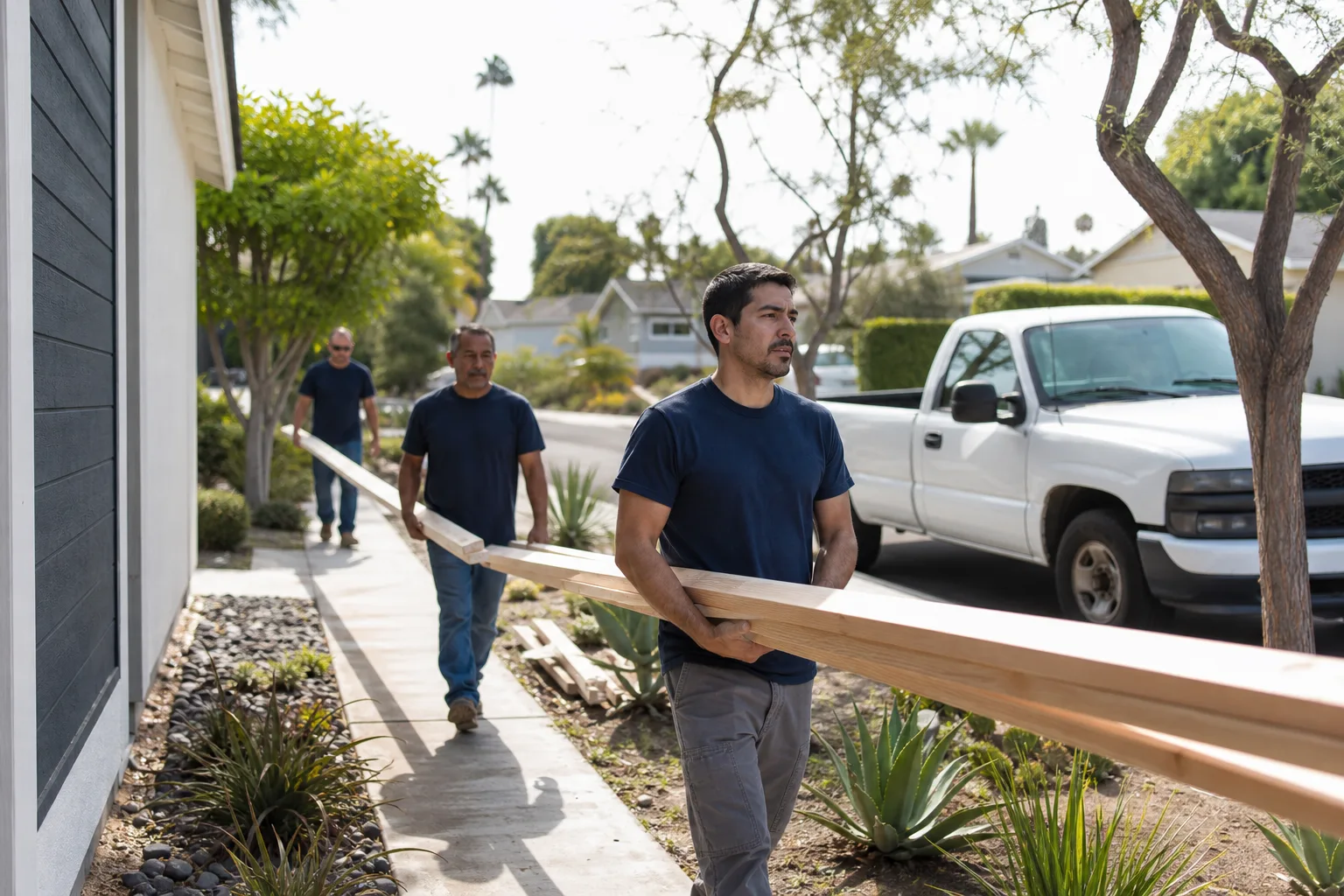
In Torrance, material mismatches often show up in three places. First, insulation. Your spec sheet might say R-21 batt insulation for exterior walls. The delivered product is R-13. The contractor saves a few hundred dollars. Your energy bill over 20 years pays for it. Second, windows. You approved dual-pane, low-E vinyl windows from a specific manufacturer. The delivery is a different brand with lower U-factor performance. Third, lumber. The contract specifies kiln-dried Douglas fir for the framing package. The lumber that shows up is green, or a lower grade, or both. You won’t see the difference until the walls start to bow or the drywall cracks.
The reason mismatches happen is usually not malice. It’s substitution without approval. The contractor runs into a supply delay on the specified item, so they substitute what’s available and hope you won’t notice. Sometimes the substitution is fine. Sometimes it’s not. The distinction is whether they asked you first.
Here’s what to do when the delivery doesn’t match:
- Photograph the delivery ticket and the materials on the ground before anything is installed.
- Compare each line item to your spec sheet. Note every discrepancy.
- Call the contractor the same day and ask for a written explanation and approval process for substitutions.
- If the substitution is inferior in any way, ask for a credit or a replacement. Do not accept “it’s basically the same” without a written confirmation.
Our approach at Seedling ADU Torrance is to name substitutions before they happen. If a specified material is backordered, you get a call, a written comparison of the proposed substitute, and the price difference applied to your total. You decide. The crew doesn’t touch the material until you say yes. It’s part of the Cedarwell Care Promise: a live person is available by phone 24/7, and you get answers before materials get installed, not after.
Three Phrases That Signal Scope Creep Is Being Set Up
Scope creep rarely announces itself as a change. It shows up in casual phrases during walkthroughs or phone calls. Here are three phrases we hear most often from Torrance homeowners who later find themselves holding a bill for work they never approved. If you hear any of these, stop and ask for written clarification before the next day’s work.
1. “While we’re in there, we might as well…” This phrase is the classic scope creep opener. It sounds reasonable, like the contractor is being helpful. But “might as well” is not a scope decision. It’s a suggestion that will later appear as a line item. If the topic is genuinely worth doing, it should go through a change order with a written price and your signature. “While we’re in there” is how a $400 project becomes a $4,000 project without anyone lying.
2. “You’ll want this eventually.” This phrase shifts the decision to you but under pressure. The contractor implies that if you don’t do it now, you’ll regret it later. The truth is that many future wants can be done later for a known price. A written price before any work starts is the standard. If a contractor can’t tell you what “eventually” costs, don’t approve it now.
3. “It’s not in the contract, but I can take care of it.” This is the most dangerous phrase of the three. It frames an out-of-scope item as a favor, something the contractor will just handle for you. Then the bill comes. Or worse, the work is done badly because it was never planned or permitted. A legitimate contractor who wants to help you will say: “That’s outside the current scope. Let me write a change order with a firm price, and you can decide.” That’s how you know you’re working with someone who respects your money.
Ben Ortega’s rule at Seedling ADU Torrance is simple: if it’s not in writing, it doesn’t exist. Every change, every addition, every “small thing” gets a written price and your signature before the crew touches it. That’s not bureaucracy. It’s the only way a family can plan a budget and trust that the number they signed for is the number they’ll pay.
What a Legitimate Change Order Looks Like
Not all changes are bad. In fact, most ADU projects in Torrance have at least one legitimate change: the homeowner sees the framing and wants to move a wall, or decides to upgrade the flooring, or adds an extra electrical outlet. The difference between a legitimate change and a scam is whether the change order is written, priced, and signed before the work is done.
A legitimate change order contains at least six elements:
- A written description of the change. What is being added, removed, or modified, in specific terms. Not “do the bathroom better” but “upgrade bathroom floor tile from builder-grade ceramic to 12×24 porcelain, matte finish.”
- The firm price for the change. A dollar number, not an estimate, not a range, not “we’ll see how it goes.” If the price is not firm, it’s not a change order, it’s an open-ended agreement.
- The schedule impact. How many days this change adds to the project. In Torrance, where inspection scheduling can add weeks, this is not a minor detail.
- Your signature and the contractor’s signature. Both parties agree. A verbal agreement is not a change order, no matter how friendly the conversation was.
- The date. When the change was agreed to, so you have a record of the sequence of decisions.
- Any permit impact. If the change requires a plan revision or a new inspection, the change order should say so. Some changes, like moving a load-bearing wall, trigger a plan check revision with the City of Torrance. The change order should name that.
What a legitimate change order never looks like: a text message saying “can you send another $3k?” Or a crew member telling you “the boss said to ask if you want us to run an extra circuit, cash.” Or a note on the final invoice labeled “additional work performed” with no prior discussion. Those are billing surprises, not change orders.
Some Seedling ADU Torrance projects use prefab ADU models from brands like Abodu, Cover, or Dvele. With those systems, the change order process is often simpler because the manufacturer’s standard specifications are clearly documented upfront. If you want a change, it’s priced against a known baseline. The same principle applies whether your ADU is stick-built or panelized: written scope, firm price, signed approval, no surprises.
Common Mistakes to Avoid
- Never checking the permit against the contract. We covered the steps above, and it bears repeating. A permit mismatch is the earliest warning sign that something is off. It takes five minutes to check on the City of Torrance portal.
- Paying too much upfront. California law limits down payments for home improvement contracts. In Torrance, a contractor asking for 50% or more before any work starts is a state law violation and a warning sign. Standard practice is 10% or $1,000, whichever is less, for most residential work.
- Accepting verbal agreements. If it’s not written, it doesn’t exist. Verbal agreements on scope, price, or schedule are vanishingly hard to enforce. Get every commitment in writing, even a text or email.
- Ignoring material deliveries. The delivery is the moment when you can catch a substitution before it’s installed. Once the drywall covers the insulation or the tile is set, the cost to fix a mismatch triples.
- Assuming permit delays are always the city’s fault. Sometimes they are. But a contractor who waits until the last minute to file a deferred submittal, or who files incomplete plans, creates delay and blames the city. Ask to see the submission timeline.
- Not asking for a clean-up protocol before work starts. Will floors be covered? Will the crew wear shoe covers inside the house? Will pet-safe products be used where there’s a choice? If a contractor can’t answer those questions, you’re about to live with dust and debris for months. The Cedarwell Care Promise exists for exactly this reason: shoe covers, drop cloths, pet-safe products where there’s a choice, and a photo of the clean-up before the crew leaves.
When to Call a Professional
Call a professional the moment you discover a permit discrepancy, a rotating crew, a material mismatch, or a verbal agreement being presented as a change order. These are not situations that improve with time. In our experience, a Torrance homeowner who catches a permit mismatch in the first week can resolve it with a phone call. The same homeowner who catches it at the final inspection is looking at a stop-work order, a plan revision, and a schedule slip measured in months.
If you’re mid-project with another contractor and something feels wrong, you don’t have to fire them. But you should get a second opinion. Seedling ADU Torrance offers free estimates on garage conversions and ADU projects throughout Torrance, and we’re happy to review your paperwork and tell you honestly whether what you’re seeing is normal or a problem. Call (424) 488-0926.
Frequently Asked Questions

The most common warning sign is a permit that doesn’t match the signed contract, either in address, scope, or contractor of record. We see it most often with permits that list a smaller scope than what the contract promises, which leaves the homeowner paying for unapproved work. Check your permit on the City of Torrance portal before work begins. Call (424) 488-0926 if you need help reading what you find.
You check by searching your address on the City of Torrance Building Department’s online permit portal, then comparing the permit’s scope description to your signed contract. Look at square footage, room count, use designation, and the contractor name. If anything doesn’t match, ask for a written explanation before the next workday. Estimates from Seedling ADU Torrance are free, and we’ll walk you through what the permit says.
It’s normal for different trades to come and go, but it’s not normal for the same trade to rotate through multiple crews in a short period without explanation. That pattern typically signals a general contractor with cash flow problems, and it increases your risk of mechanic’s liens and construction defects. Ask the GC in writing why the crew changed and whether the departing crew was paid in full.
Photograph the delivery, compare each item to your spec sheet, and call the contractor the same day. Ask for a written explanation and either a credit or a replacement if the substitution is inferior. Do not allow installation until the issue is resolved. At Seedling ADU Torrance, substitutions are approved by you in writing before anything is installed.
There’s no standard price, because every change is different. A legitimate change order always includes a firm written price, a description of the work, the schedule impact, and your signature before work begins. In Torrance ADU projects, minor changes like adding an outlet might run $200 to $500, while moving a wall could be several thousand dollars and trigger a plan revision. If a contractor can’t give you a firm price in writing, don’t approve the change.
Yes. Seedling ADU Torrance works with Abodu, Cover, Dvele, and Mighty Buildings, among others, so you can choose the right product for your lot rather than the one a builder prefers to sell. Every project, prefab or stick-built, gets a written price before work starts and the 365-Day Done Right Promise when it’s done. Call (424) 488-0926 for a free estimate.
The Bottom Line
ADU warning signs in Torrance are quiet, administrative, and almost always visible weeks before they become expensive. The permit that doesn’t match the contract. The crew that rotates without explanation. The materials that don’t match the spec sheet. The casual phrase that will later become a bill. None of these require a construction background to catch, and you can find more guides & resources on our blog. They require a five-minute permit check, a written spec sheet, and the willingness to ask one direct question when something doesn’t add up. A responsible contractor will welcome the question. A contractor who deflects it has told you everything you need to know. Build with a written price, a signed scope, and a builder who treats your home like it’s their own.
Written by Ben Ortega, Owner at Seedling ADU Torrance, serving Torrance since 2001.