HOA & Zoning Compliance in Torrance, CA
HOA and zoning compliance for an ADU in Torrance means confirming your project meets three layers of rules before any construction starts: the City of Torrance zoning code, any HOA covenants that apply to your lot, and California state ADU law, which overrides many local restrictions. We handle this as part of our ADU Design & Permitting in Torrance work, so you get one team checking setbacks, height limits, parking rules, and HOA approval requirements instead of trying to piece it together yourself. If you’re wondering whether your Torrance lot can legally hold an ADU, call (424) 488-0926 and we’ll walk through what your specific address allows.
Most Torrance homeowners we meet have never read a zoning code in their lives. That’s normal. The Torrance Municipal Code has specific ADU provisions around lot coverage, rear-yard setbacks, and what counts as livable space, and HOAs in planned communities like Southwood, Seaside Ranchos, or the tracts near Hickory Park layer their own architectural review on top. Our job is to translate all of it into plain language and a clear yes or no, with the written price attached before you commit.
Ben Ortega leads this work at Seedling ADU Torrance. He’s walked dozens of Torrance properties through the compliance check and knows which questions the city’s planning counter will ask before they ask them. That means fewer surprises in your inbox and a faster path from idea to permit application.
Key Takeaways
- California state ADU law (AB 68, AB 881, SB 9, and related bills) overrides most local zoning barriers, but Torrance still has site-specific rules for setbacks, height, and lot coverage.
- HOA restrictions still apply to ADUs in Torrance communities with active HOAs, though state law limits what HOAs can prohibit outright.
- A compliance review before design saves homeowners an average of 3 to 6 weeks of rework, based on what we see across Torrance projects.
- We provide a written compliance summary with citations from the Torrance Municipal Code so you’re never relying on someone’s vague reassurance.
- Seedling ADU Torrance includes compliance checking in every ADU design and permitting package. No separate surprise line item.
When You Need HOA & Zoning Compliance
If any of these situations describe your Torrance property, a compliance review should happen before you spend money on plans:
- You live in a Torrance HOA community. Neighborhoods like Southwood Riviera, the townhome tracts east of Crenshaw, and several developments near Wilson Park have active HOAs with CC&Rs that address ADUs, garage conversions, and even exterior paint and roofing materials. HOAs can require architectural review, and skipping that step can trigger fines or a stop-work letter.
- Your lot is smaller than 5,000 square feet. Torrance has a lot of postwar single-family lots in the 4,500 to 5,500 square foot range, especially in the Old Torrance and Southeast Torrance areas. Smaller lots hit setback and lot-coverage limits faster, so a compliance check determines whether you can build a detached ADU or need to convert the existing garage instead.
- You’re planning a garage conversion. Torrance treats garage conversions (also called JADUs or conversion ADUs) differently from new detached units. Parking replacement rules, fire separation requirements, and the condition of the existing slab all come into play.
- Your home is in a historic district or has a preservation overlay. Parts of Old Torrance have historic designations that affect what can be built, even in the rear yard. Compliance work identifies these overlays early so you don’t commission plans the city won’t accept.
- You’ve received a letter from your HOA or the city. If you already got a notice about an unpermitted structure, a setback violation, or an HOA complaint, compliance work becomes urgent. We can assess what’s fixable and what the city will require for retroactive permitting.
- You want to list your ADU as a rental. Torrance has rules about short-term rentals (under 30 days), and some HOAs restrict rental use of ADUs entirely. A compliance check confirms what your specific property allows before you invest in construction.
What HOA & Zoning Compliance Actually Covers
Compliance is not a single checkbox. It’s a stack of requirements from different authorities, and missing any layer puts the whole project at risk. Here’s what we review on every Torrance ADU project:
City of Torrance Zoning Code
The Torrance Municipal Code (Title 9, Zoning) governs setbacks, height limits, lot coverage, floor area ratio, and parking. For ADUs specifically, California state law sets the baseline (a minimum 800 square foot detached ADU, reduced setbacks of 4 feet for rear and side yards, no required parking if the property is within a half-mile of public transit or in a historic district), but Torrance applies these within its own code structure. We verify your specific zoning district, pull the current development standards, and confirm what the city will approve at plan check.
California State ADU Law
State law has changed nearly every year since 2017, and it keeps changing. AB 68 removed owner-occupancy requirements. AB 881 eliminated impact fees for ADUs under 750 square feet. SB 9 created lot-split and duplex pathways that sometimes interact with ADU plans. We track these changes so your compliance summary reflects what’s enforceable now, not what a contractor remembered from three years ago.
HOA CC&Rs and Architectural Guidelines
If your property is in an HOA, the Covenants, Conditions & Restrictions (CC&Rs) are a binding contract you signed at purchase. HOAs can require design review, dictate exterior finishes, restrict construction hours, and limit the number of vehicles parked on the street during construction. California Civil Code 4751 prevents HOAs from banning ADUs outright, but they can still impose reasonable approval processes. We read the actual CC&Rs for your property, summarize what applies, and prepare the HOA submittal package if one is required.
Utility and Infrastructure Checks
Torrance provides water and sewer service through the Torrance Municipal Water Department, and power comes from Southern California Edison. A detached ADU usually needs a separate sewer lateral connection or a connection to the existing line, and some parts of Torrance have older clay sewer pipes that need a condition check before the city will sign off. We identify these requirements early so they don’t appear as surprise change orders mid-project.
Our HOA & Zoning Compliance Process
Here’s how the compliance work unfolds, step by step, so you always know where your project stands:
- Initial phone conversation. You call (424) 488-0926 and tell us about your property. We ask about the lot size, the presence of an HOA, whether you want a detached ADU or a garage conversion, and what your timeline looks like. We give you an honest first read on feasibility, including any red flags we already see.
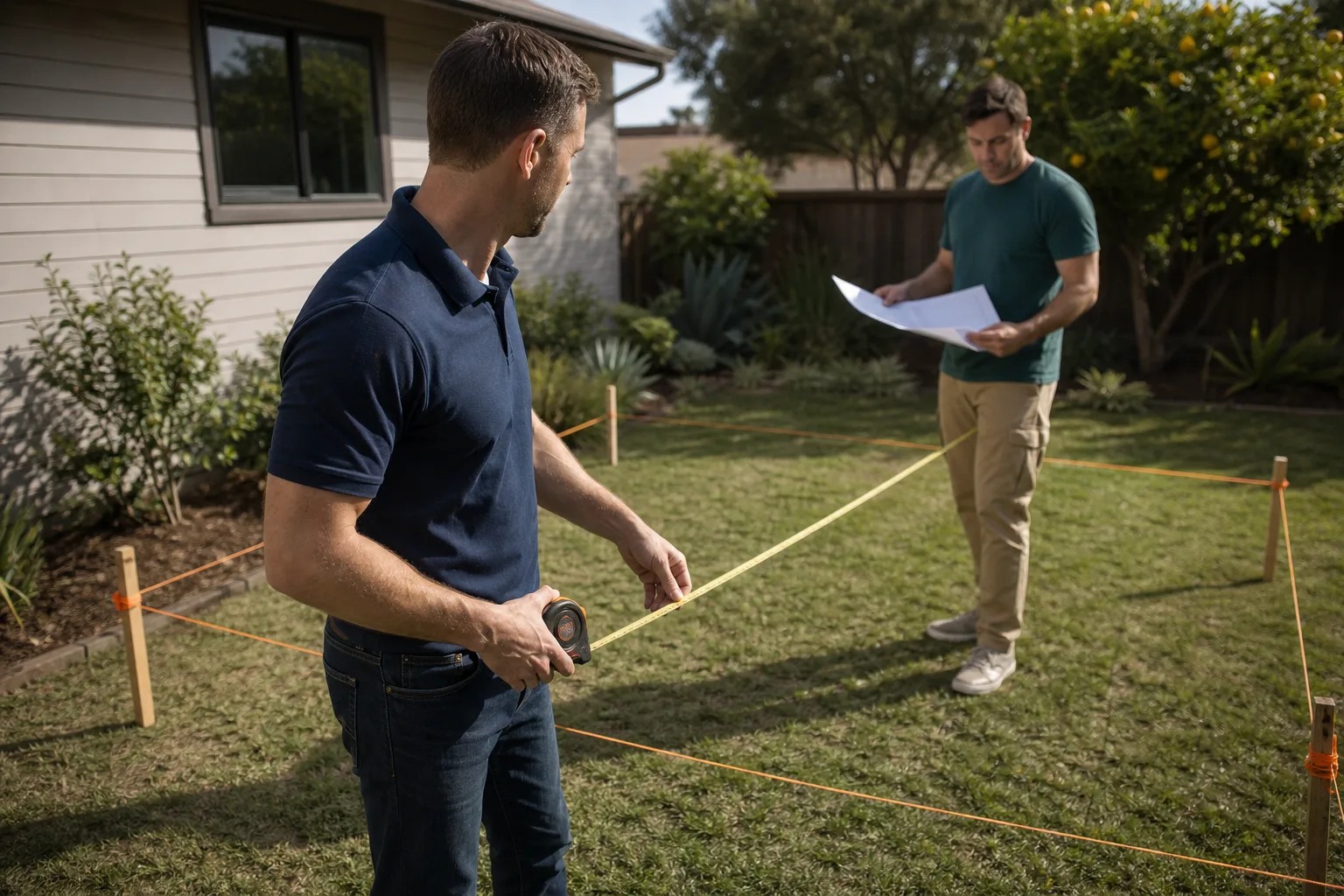
- Property records review. We pull the Torrance zoning designation, parcel data from the Los Angeles County Assessor, city codes for your specific zone, and HOA documents if applicable. If you have your title report or CC&Rs, we ask for a copy. If you don’t, we help you obtain them.
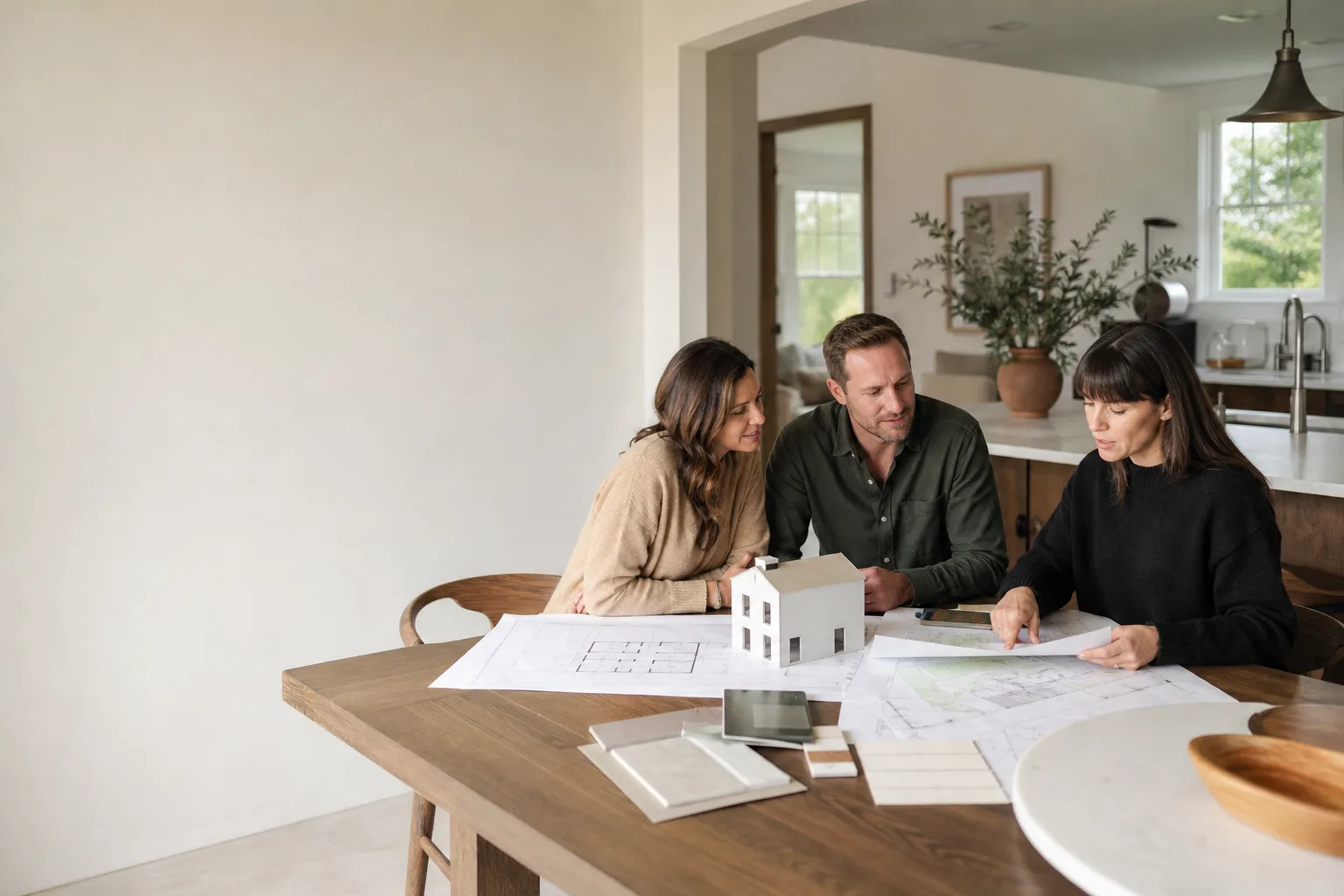
- Written compliance summary. You receive a document that lists every requirement that applies to your property, what it means for your ADU plans, and what we recommend. This includes setback measurements, height limits, parking requirements, HOA submittal steps, and any state-law overrides that work in your favor. No vague language. No unwritten caveats.
- Design integration. If you’re moving forward with Seedling, the compliance findings feed directly into the ADU design. That means the floor plan respects the rear setback from day one, the height doesn’t trigger a variance, and the finishes meet HOA guidelines if one applies. We also review manufacturer specs for the prefab and modular options you might choose, making sure the unit dimensions and foundation requirements work on your specific Torrance lot.
- Permit submittal and follow-through. We prepare the permit package for the City of Torrance, including all required drawings, structural calculations, and compliance documentation. Then we track the application through plan check, respond to city comments, and keep you posted on progress. If the HOA requires a separate approval, we prepare that package too.
- Pre-construction confirmation. Before any crew member sets foot on your property, we confirm the approved plans match the compliance summary and that nothing changed during permit review. This is the moment a lot of projects go sideways. We catch it here, not during framing.
HOA & Zoning Compliance Pricing in Torrance
Most Torrance homeowners spend between $1,200 and $4,800 on HOA and zoning compliance work as part of a larger ADU project. Standalone compliance reviews, where you’re not yet ready to commit to a full design and permitting package, typically run $600 to $1,800 depending on the complexity of your lot and whether an HOA is involved.
Here’s what the pricing looks like in practice:
- Standalone zoning check for a standard single-family lot, no HOA: $600 to $1,100. Includes parcel research, Torrance zoning verification, and a written compliance summary.
- Standalone zoning check with HOA review included: $1,100 to $1,800. Adds CC&R reading, HOA submittal preparation, and any required architectural review forms.
- Compliance bundled with full ADU design and permitting: Included in the written design and permitting price. Seedling does not charge a separate compliance line item when compliance is part of a full project.
- Complex lots or multi-layer review (historic overlay, lot split, variance requests): $2,500 to $4,800. These are less common but happen in Old Torrance and in property-line situations where setbacks are tight.
What affects the cost? The presence of an HOA is the biggest variable, because HOA review adds document work and sometimes requires attendance at architectural committee meetings. Lot complexity matters too: a standard 5,000 square foot flat lot in Southeast Torrance is straightforward, while a hillside lot in the PVE-adjacent sections of South Torrance or a property with an existing unpermitted structure requires more research. And if your project needs a variance or a discretionary permit, city fees and review time both increase.
Every compliance review comes with a written price before we start. No hourly billing surprises. No retainer games. Call (424) 488-0926 and we’ll give you a number based on your actual address.
Why Torrance Homeowners Choose Seedling for Compliance Work
Compliance work is about accuracy and follow-through. It’s not glamorous, but it’s where ADU projects either stay on track or spiral into months of delays. Here’s what we do differently:
Written compliance summaries with code citations
When we tell you your rear setback is 4 feet, we cite the Torrance Municipal Code section and the state ADU law provision that applies. You can verify every claim we make. If the city planner disagrees, you have the documentation to have a real conversation instead of a he-said-she-said.
One team from compliance to completion
Seedling ADU Torrance doesn’t hand you a compliance report and send you off to find a designer. The person reviewing your zoning is connected to the team drawing your plans and the crew building your ADU. Information doesn’t get lost between vendors because there are no vendors. The whole thing lives under one roof.
Upfront pricing, always
Every family we work with receives a written price before any work begins. That applies to compliance reviews, design work, permitting, and construction. No surprise line items appear after crews arrive. If something changes on the city side, we talk to you first and put the new number in writing before proceeding.
Prefab and modular expertise
If you’re considering a prefab ADU from Abodu or Cover, or a modular build from Dvele, we know what those units require before the city signs off. Abodu units, for example, arrive prefabricated and need specific foundation and utility connections that Torrance plan check treats differently than a site-built ADU. Dvele’s designs emphasize energy performance, which matters if you’re pursuing Title 24 compliance or green building incentives. Our compliance review accounts for the manufacturer’s specs so you don’t get caught with a unit that doesn’t fit your setback envelope.
The Cedarwell Care Promise
Seedling ADU Torrance is part of the Cedarwell family of companies, which means every job adheres to the Cedarwell Care Promise: shoe covers and drop cloths inside the home, pet-safe products where there’s a choice, a photo of the clean-up before the crew leaves, and a live person available by phone 24/7. Compliance work is desk work for the most part, but when someone does need to visit your property, the same standards apply. Background-checked, uniformed technicians. A phone that gets answered by a human, not a tree.
The 365-Day Done Right Promise
Every completed project we deliver carries the 365-Day Done Right Promise in writing. If something isn’t done right within the first year, we make it right. That applies to compliance work too. If a permit gets held up because of something we missed, we fix it at our cost.
What Torrance’s Zoning Means for Your ADU Plans
Torrance is a built-out city. Most single-family lots were subdivided between the 1920s and the 1970s, and the city’s zoning reflects that history. Here are a few things we regularly see on Torrance properties:
Setbacks. State ADU law establishes minimum setbacks of 4 feet for detached ADUs, but Torrance’s underlying zone may have larger setbacks for the primary dwelling. The ADU setback applies to the ADU itself, not the existing home, which often gives homeowners more room than they expected in the rear yard.
Lot coverage. Torrance limits total impervious coverage (structures plus hardscape) in most residential zones. On smaller lots in the 5,000 square foot range, lot coverage can be the limiting factor that determines whether you can add a detached ADU or need to convert the existing garage footprint instead. Our compliance review calculates your lot coverage before you fall in love with a floor plan.
Parking. State law eliminates parking requirements for ADUs within a half-mile of public transit, and Torrance’s bus network on major corridors (Artesia, Hawthorne, Torrance, Crenshaw) means many properties qualify for the parking exemption. When parking is required, it’s typically one space per ADU or efficiency unit, and it can be provided in tandem on an existing driveway. Garage conversions replace the covered parking, so Torrance may require a carport or covered parking alternative depending on your zone.
Height. Detached ADUs in Torrance are generally limited to 16 feet, or 18 feet if within a half-mile of transit. A 2-story ADU is possible in some situations but triggers more design constraints. We’ll tell you what your specific zone allows.
Working With HOAs in Torrance
If you live in a Torrance HOA, the compliance path is longer but still very workable. State law is on your side: California Civil Code 4751 says an HOA cannot unreasonably prohibit an ADU, and HOAs cannot impose restrictions that violate state ADU law. What they can do is require architectural review, set construction hour limits, regulate noise and debris, and enforce design standards for exterior finishes, roofing, and colors.
We prepare HOA submittal packages that match what Torrance-area architectural committees expect: site plans, elevations, material samples, and a completed application that addresses every checklist item the HOA receives from its management company. The goal is to get the review done in one round, not three. In communities where the HOA board meets monthly, a clean submittal can easily save 30 days.
Some Torrance homeowners ask us: “Can I just skip the HOA review?” You can, but it’s a bad idea. The HOA has enforcement power through fines and, in some cases, liens on your property. A city permit does not override HOA rules, and an HOA approval does not override city rules. Both layers matter. We handle both.
Torrance Neighborhoods We Serve
We work with homeowners in every Torrance neighborhood, and we know the zoning patterns that differ from street to street:
- Old Torrance. Historic bungalows, smaller lots, and some historic district overlays. ADUs here usually need to respect the architectural character of the neighborhood, and some properties qualify for streamlined review under state law.
- Southeast Torrance. Postwar single-family homes on solid 5,000 to 6,000 square foot lots. Garage conversions and detached ADUs are common here, and most lots have reasonable rear yards that accommodate a 800 to 1,000 square foot ADU.
- Southwood and Southwood Riviera. HOAs are more common in these neighborhoods, and architectural guidelines often address rooflines, exterior materials, and landscaping. We’re familiar with the document review processes for the more active associations.
- North Torrance and the areas near El Camino College. Mix of single-family homes and some multi-family zones. Zoning here is varied, so a lot-specific review matter more than in the postwar tracts south of Sepulveda.
- Walteria and the neighborhoods near Calle Mayor. Some larger lots in this part of Torrance, including hillside conditions that affect grading and drainage requirements for detached ADUs.
FAQs – HOA & Zoning Compliance
Can my HOA stop me from building an ADU in Torrance?
No, your HOA cannot outright ban an ADU in Torrance or anywhere else in California, thanks to Civil Code 4751 and related state ADU laws. What an HOA can do is impose reasonable architectural review, design standards, and construction rules, which is why we review your specific CC&Rs before you spend money on plans. If your HOA is pushing back, call (424) 488-0926 and we’ll explain what state law actually protects.
How long does zoning and HOA compliance take in Torrance?
A standard compliance review takes 5 to 10 business days from the time we receive your property documents. HOA review timelines vary by association, but most Torrance-area architectural committees meet monthly, so you should budget 30 to 60 days for HOA approval if you have an active association. City permit review for ADUs in Torrance typically runs 30 to 90 days depending on plan check volume and whether the project is a standard plan or needs discretionary review.
Can I convert my garage into an ADU if I live in a Torrance HOA?
Yes, in most cases. State law treats garage conversions as ADUs and gives them the same protections as detached units, including the prohibition on unreasonable HOA restrictions. The HOA may require you to maintain a certain exterior appearance or address parking impacts, and Torrance may require replacement parking if the conversion removes covered parking that isn’t exempt under state law. We verify both layers before you commit. Call (424) 488-0926 for a free compliance check on your specific garage.
What’s the difference between HOA approval and a city permit?
A city permit is the legal authorization from the City of Torrance to construct an ADU. HOA approval is a contractual requirement from your homeowners association. They operate independently: a city permit doesn’t override HOA rules, and HOA approval doesn’t satisfy city permitting. Missing either one can stop your project, which is why Seedling’s compliance process covers both, always in writing.
Free Estimate for HOA & Zoning Compliance in Torrance
If you’re considering an ADU, garage conversion, or home addition on your Torrance property, start with a free compliance conversation. We’ll review your address, tell you what the zoning allows, identify any HOA requirements, and give you a written price for whatever you need next. No obligation, no pressure. Call (424) 488-0926 and talk to a real person who knows Torrance zoning. Ben Ortega and the Seedling ADU Torrance team answer the phone.
Written by Ben Ortega, Owner at Seedling ADU Torrance, serving Torrance.